At the “singles” table there were three people: an uncle who interrupted everyone, a cousin who looked at her phone, and Panni, who had been put there because the bride had said: “Don’t worry, everyone will be nice.”
Then Máté came and sat down in the fourth chair.
“Who are you?” asked the uncle.
“The bridegroom’s former colleague,” said Máté. “Or rather, his former colleague’s former colleague. Or…”
“That tells us nothing.”
“It tells me nothing either,” said Máté, and Panni suddenly laughed out loud, and the sparkling wine came out of her nose.
That was the moment when it was decided that, at this wedding, there would be two people who would stick together.
The dinner lasted three hours. The uncle talked about foreign-exchange loans, the cousin looked at her phone, and by the fourth course Panni and Máté were already speaking their own language: quietly, behind napkins, they commented on the whole wedding.
“Look at the uncle tearing the bread,” whispered Máté.
“It’s not bread, it’s a decoration.”
“Yes. And now he’s eaten it.”
“He hasn’t!”
“He just did.”
Panni covered her mouth with her hand and pretended to cough.
Then, at the sixth course, Máté said:
“Let’s invent a story for each other. One that nobody believes, but that nobody can disprove either.”
“Why?”
“Because for the next two hours everyone is going to ask who we are, and I don’t want to explain fifteen times over that I’m the former colleague of the bridegroom’s former workplace.”
Panni put down her fork.
“All right. You are…” She looked him up and down. “You are a Hungarian teacher who has lived abroad for four years and came home because your mother asked you to bring her a box of real túró rudi, the curd-cheese bars.”
“Why túró rudi?”
“Because everyone believes that, and nobody asks any further.”
Máté nodded seriously.
“Accepted. And you?”
“I’m…” Panni thought. “I’m an astronomer. Not the kind with a telescope. The kind who analyses data, and once I found a star that has been named after me ever since.”
“That’s not true.”
“No,” said Panni. “But you did just wonder whether it might be.”
Máté laughed aloud, and the laugh was so loud that the table beside them turned round.
After the eighth course the band began to play. The bride and groom danced, then everyone did, and the “singles” table emptied, because the uncle set off towards the bar and the cousin disappeared into the garden with somebody who was not her cousin.
Panni and Máté stayed where they were.
“Don’t you dance?” asked Máté.
“I can’t.”
“Nor can I.”
“Then it’s perfect.”
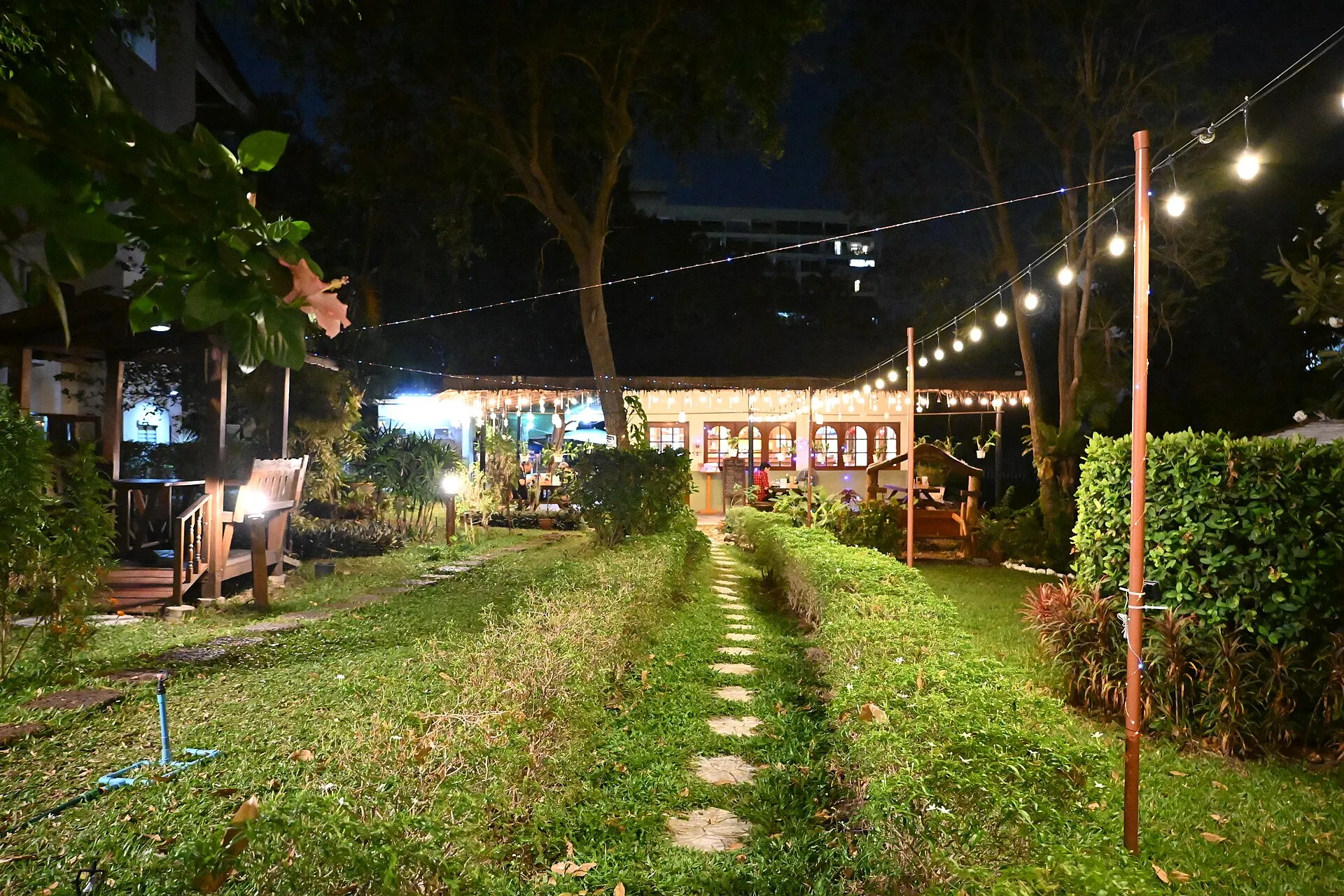
They went out onto the terrace, where the strings of lights hung between the trees, and where it was summer, and the air was as soft as an evening that does not want to end. The music came through from inside, muffled. The two of them stood at the railing and looked at the garden and did not speak, and it was the first silence of the evening that was not awkward.
“Panni,” said Máté.
“Yes?”
“What’s your real story?”
Panni looked at her glass.
“Really? The bride is my friend, and she asked me to sit at the singles’ table because she thought she was doing me a favour. I broke up with someone two months ago, and I didn’t want to come, and now I’m standing here and… I’m enjoying myself. That’s the part that bothers me most.”
Máté nodded.
“And I came because the bridegroom used to be my colleague, and because I had nothing else on for a Saturday evening. That’s the whole truth. There’s no túró rudi in it, and no star.”
Panni looked up at him.
“So now we know the truth about each other.”
“Yes,” said Máté. “That’s a good enough beginning.”
The kiss was short and tasted of sparkling wine, and it surprised them both a little, the way you notice a gate on a familiar street that has been there all along.
Then a slow number started inside, and Máté held out his hand.
“I can’t dance,” said Panni.
“Nor can I. But tonight we invented two people who can.”
Panni took his hand, and they went in, and they could not dance, and everyone saw it, and nobody cared. Under the strings of lights, in the middle of summer, two strangers trod on each other’s feet and laughed, and the bride watched them from behind the table and thought that at last she had got something right.
At two in the morning, when the band stopped, Máté walked Panni to the gate.
“Have you got the túró rudi?” asked Panni.
“I’ll buy it tomorrow.”
“And what will you say when they ask who it’s from?”
Máté thought about it.
“I’ll say: from the singles’ table.”
Panni laughed, and as she got into the taxi she waved back at him, and Máté stood there at the gate and thought that the first time in your life you meet someone you will not forget, it is not at your best friend’s wedding.