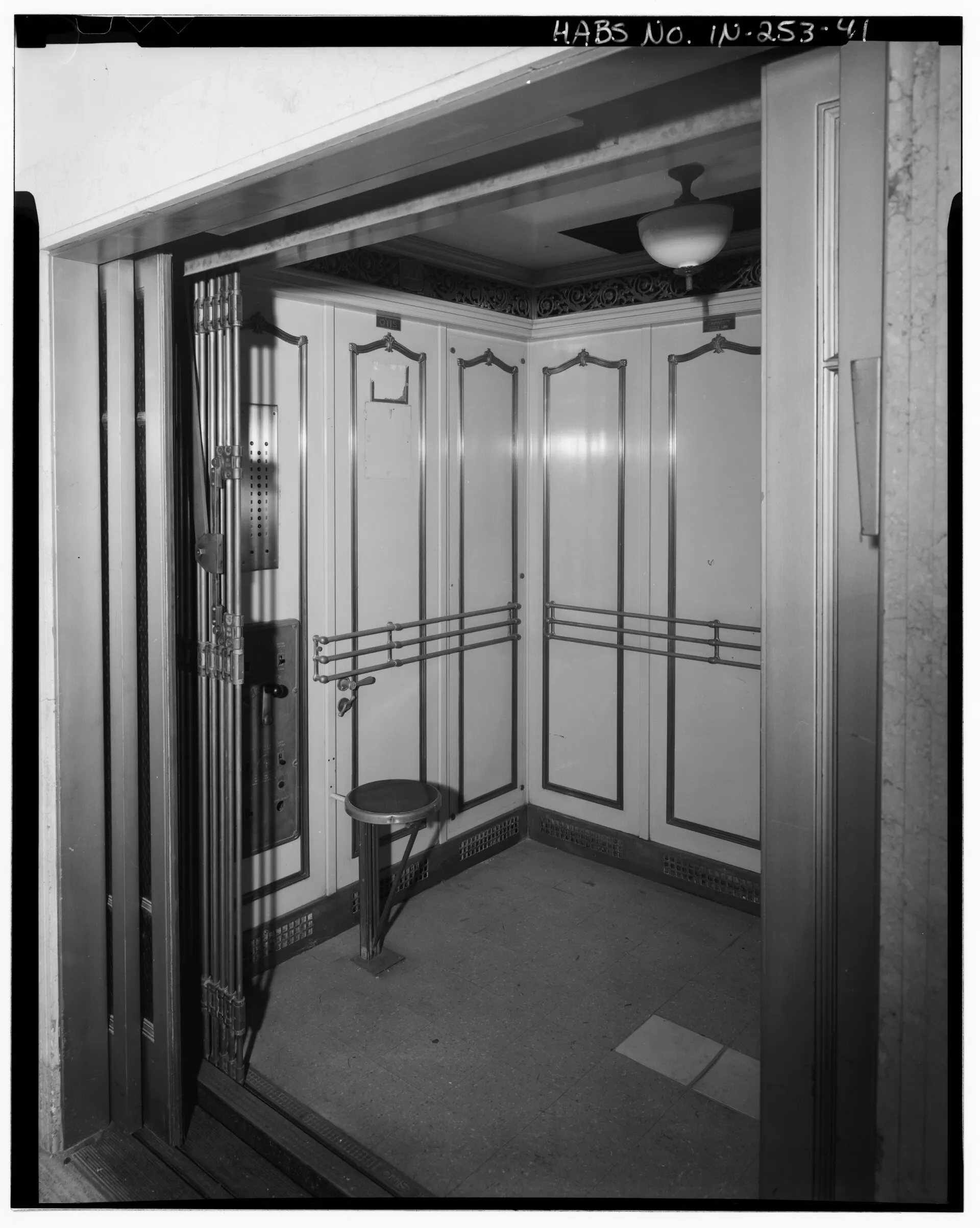
The lift stopped at 19:42, exactly between the eleventh and twelfth floors, and in that moment Nóra still believed she only had to wait.
Then the lights went out.
Not entirely — the emergency light stayed on, that yellowish, sickly glow that looks the same in every office building and makes a person feel suddenly like they are inside an aquarium. Nóra pressed the alarm. Nothing. She took out her phone: no signal, because behind the steel panelled walls of a lift, twentieth-century technology always wins.
“That won’t work.”
The voice came from behind her. Nóra turned, and only then saw the man — standing in the corner in a dark suit, no tie, a laptop bag on his shoulder, looking at her like someone who had known for ten minutes that this would happen.
“How long have you been here?” asked Nóra.
“Since eight.” The man pointed at the ceiling. “The display was at thirty-nine minutes when it stopped. Forty-two minutes now.”
“And you didn’t say anything?”
“I assumed you’d notice.”
Nóra laughed. She did not mean to, but she laughed, and the sound bounced off the metal walls, and that laughter was like someone opening a window in an empty room.
“Sorry,” she said. “I’m not laughing at you.”
“Oh, you are,” said the man. “It’s fine. I laughed too, when you got in.”
The lift shuddered, then went quiet again. Somewhere outside, at the height of the eleventh floor, a pump hummed, and the sound suddenly made Nóra very tired.
“I’m sitting down,” she said, and slid down the wall to the floor, putting her bag beside her. “Since we’re stuck here.”
The man nodded and sat down in the opposite corner. Two metres separated them, and those two metres suddenly mattered a great deal, because in a lift distance is the only thing a person can still control.
“Bence,” said the man.
“Nóra.”
“Nóra, if we’re still here tomorrow morning, we’ll be forced to talk.”
“Is there another option?”
“Sleeping.”
Nóra pulled her knees up and rested her chin on her arm.
“My boss was fired today,” she said.
Bence looked up.
“How is that relevant?”
“Because I was the one who got promoted instead of him, and tonight I carried home twice as much work as yesterday. And now I’m sitting in a lift thinking this might be the best thing that happened today.”
Bence looked at her for a long time. Then he said:
“I had nobody to go home to tonight.”
The lift hummed. The emergency light glowed yellow, and for a moment they were both silent, because the man’s sentence stayed in the air, heavy as a dropped set of keys.
“I’m not asking for pity,” Bence added. “It’s just… my wife moved out on Monday, and I stayed until eleven tonight because I didn’t know what to do with the flat.”
“And what will you do?”
“Nothing.” Bence smiled, and the smile was tired but honest. “I’m sitting in a lift with a woman who got promoted in his place. That’s already more than I expected.”
Nóra laughed again, and this time not at nothing but at him — and when Bence laughed too, she noticed the fine lines at the corners of his eyes, the kind that make a face better than a symmetrical one.
Then silence again. But a different kind.
Nóra could not say when the two metres became one and a half. She only noticed that his voice had grown quieter, as if the steel walls should not hear; and that she was speaking more quietly too. They talked about how Nóra had never managed to go on holiday alone. About how Bence once learned piano only to impress a girl, and the girl left and the piano stayed. About how Nóra loves dawn but hates getting up. About how Bence cannot sleep unless the window is open.
“That’s a problem in winter,” Nóra observed.
“Yes. That’s a problem in winter.”
And then, on exactly that note, Nóra felt her shoulder touch his, and neither of them moved away.
They did not kiss then. That came later — much later, on an evening when they could already say each other’s names without having to think about what they meant. For now they simply sat side by side, shoulder to shoulder, and Nóra rested her head on his shoulder for a moment, and Bence did not move, and that moment was worth more than anything that could have been said about it.
Five minutes before two in the morning, the power came back.
The lift jerked into motion, clicked, and for a second they were both startled, as if something had broken. Then the doors opened on the twelfth floor, where nobody was waiting for them, only the corridor’s neon light and the hum of a cleaning machine.
Nóra stood up. Her skirt was dusty. Bence stood up too, put the laptop bag on his shoulder, and for a moment they both stood there like two people who do not know how to end something that never began.
“Nóra,” said Bence.
“Yes?”
“If perhaps…” He stopped. Then he reached into his pocket and took out a business card with only a name and a phone number on it, nothing else. “I’m not giving you this because of right now. I’m giving it because I don’t want a lift to be the only place we ever talked.”
Nóra took it. The card was cold from his pocket.
“Bence,” she said. “I don’t have a card. But if you want, you can call.”
“I will,” said Bence. “Tomorrow.”
“I’m working tomorrow.”
“Then the day after.”
Nóra smiled, and in the corridor’s neon light that smile was like the dawn she loved but never wanted to get up for.
“All right,” she said. “The day after, then.”
Bence nodded and walked towards the stairwell, because after one night like that he had decided never to take a lift again.
Nóra watched him go. Then she slid the card into her pocket and thought that some people enter your life the way a lift does: it stops, the doors open, and suddenly you have nothing to do but get in.