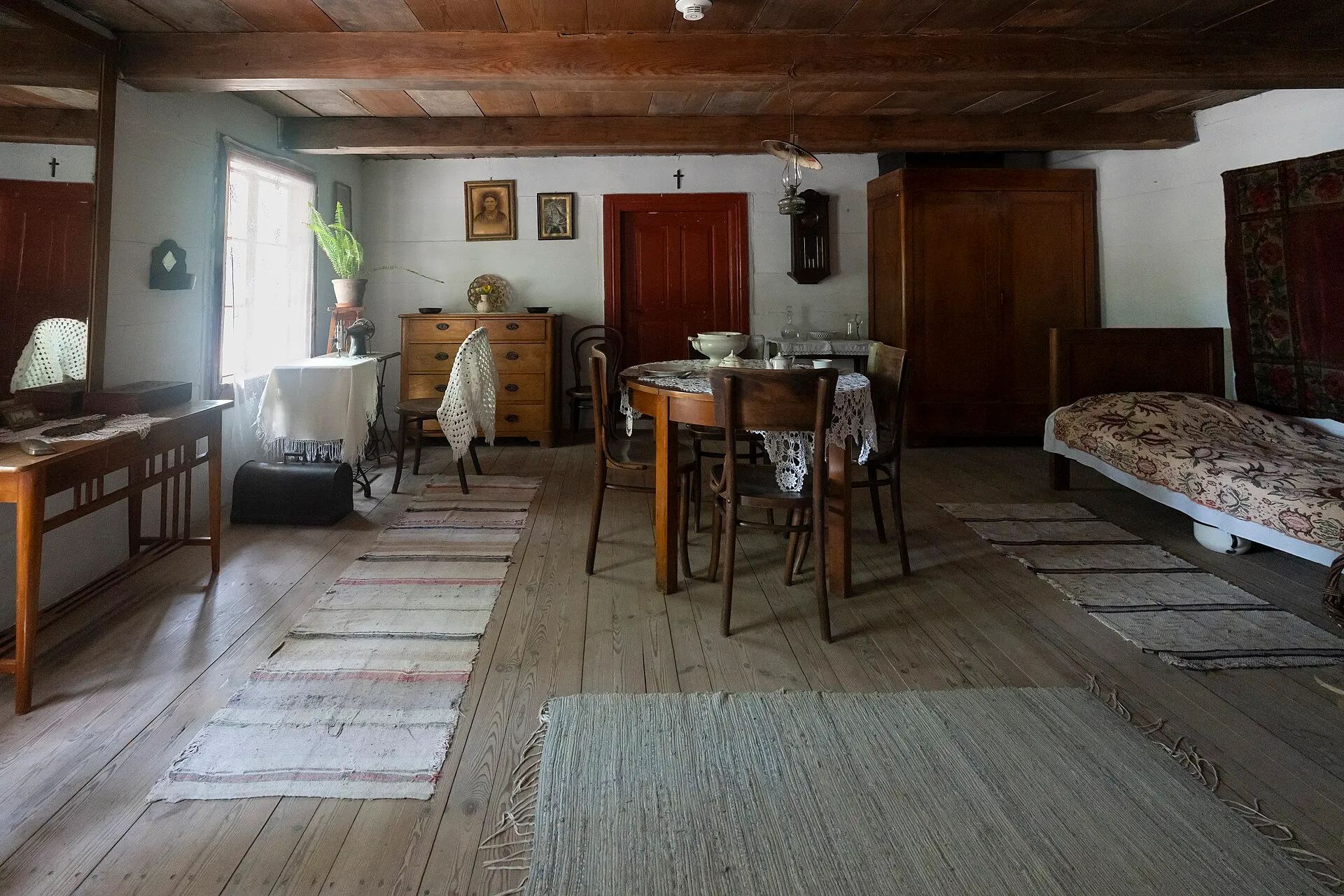
The evening was cold, and the lamps were lit in the little sitting room; the father and his son were playing chess, and the mother sat by the fire and knitted.
The house stood at the edge of the town, at the end of the road, where there were only three other houses, and at that time of year, at the end of November, nobody came that way.
“Did you hear that?” asked the father.
The gate creaked, and heavy steps came up the gravel path.
The visitor was a tall, broad-shouldered man with a large moustache; he wore a military coat, and in his pocket he was holding something tight.
It was Sergeant-Major Morris, who had served in India, and who had not been in this house for twenty years.
He sat down at the table, ate, drank, and talked: first about the old regiment, then about the temples, then about the things it is better not to talk about.
“And this?” asked the son, when Morris took the thing out of his pocket and laid it on the table.
It was a small, dried, shrunken hand, a monkey’s, and between the three fingers there was old dust.
“A fakir put the power into it,” said Morris. “Three men may wish on it, three wishes each.”
The mother pulled a face, and the son laughed.
“Why didn’t you wish?” asked the father.
Morris looked towards the window. “I wished,” he said. “And I got it.”
Nobody spoke for a while, the fire burned low, and the father put another log on.
“Throw it on the fire,” said Morris, and stood up. “If you have any sense, now.”
The father took it out of his hand. “Since it’s here,” he said, “what harm is one wish?”
“None,” said Morris. “Perhaps. Wish for something sensible.”
The father put the paw in his palm and thought. “Two hundred pounds. To pay off the house.”
The monkey’s paw twisted in his hand like a snake; he pulled away, and the paw fell to the floor.
“It moved,” he said.
“It did not move,” said the mother. “Put it away and come to supper.”
Nothing happened, nobody brought money that evening, and the son joked about it as they went to bed: perhaps the postman would bring it.
Next morning a man stood at the gate, a man from the factory where the son worked; he did not come in, he said it standing on the doorstep.
The son was at the machine when it started; nobody had made a mistake, and it was nobody’s fault.
The father asked nothing, he only stood and looked at the man.
“The firm will pay the son’s wages,” said the man. “Two hundred pounds. In compensation.”
The father said nothing, and the mother leaned against the wall.
A week passed after the funeral; the mother did not sleep, and the father sat beside her and held her hand.
One night she spoke. “Bring me the paw.”
“Why?”
“Make a wish.”
For a long time the father did not move, then he got up and brought the monkey’s paw out of the drawer; he did not want to, and he gave it to her all the same.
“I wish my son alive again,” said the mother.
Nothing. Then later, when they had gone to bed, somebody began to knock.
Softly at first, then harder: the gate, the stairs, the door.
The mother got up and started towards the door, and the father followed her.
“Don’t,” said the father. “That is not him.”
The mother reached the handle, and the father reached for the monkey’s paw and made the third wish.
The knocking stopped.
The mother opened the door: the street was empty, the lamp lit the wet grass, and the gate moved slowly in the wind.
The father took the paw back to the drawer and closed it.