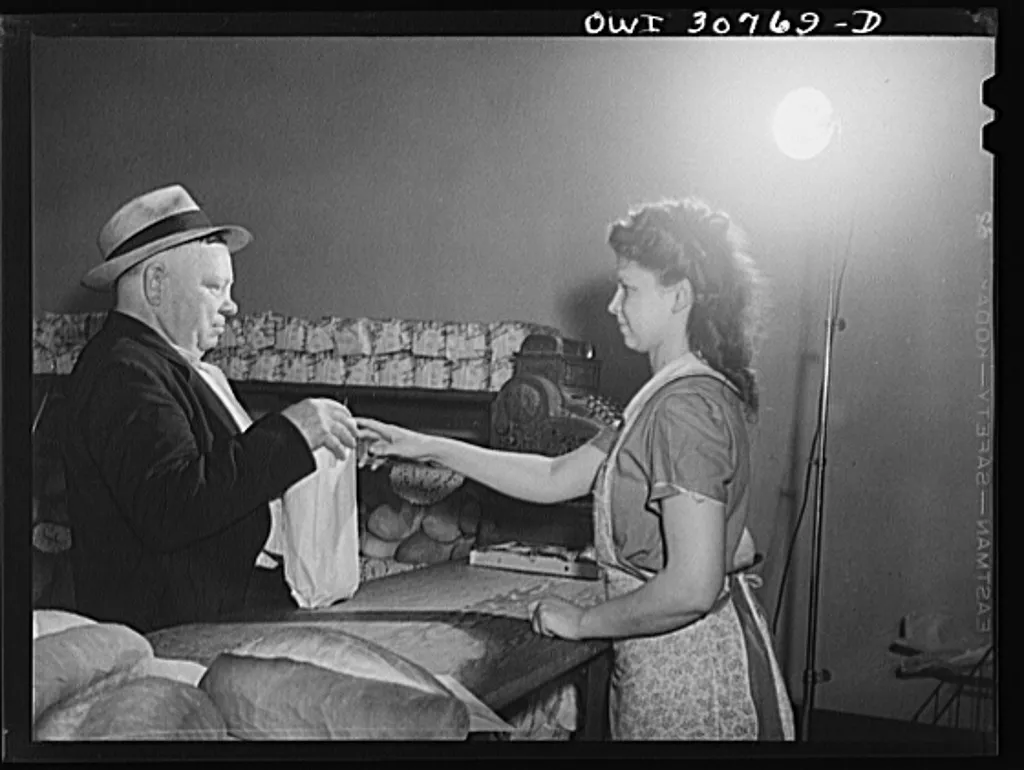
The Hajnal bakery opened at four in the morning, and for sixteen years Dávid had done the same thing every single night: switched on the oven, weighed out the flour, and let the room fill with a smell that nobody can copy who has never baked bread at dawn.
At ten past four, the woman came in.
Dark blue coat, hair in a bun, tiredness under her eyes. Not the tiredness of too little sleep, but of shifts. She always asked for the same thing: two bread rolls and a black coffee. She always paid in cash, though the card machine stood right there. She always sat in the same place, in the corner by the radiator, and for ten minutes she did nothing at all, only held the mug in both hands.
In sixteen years Dávid had learned that you do not make conversation with a customer like that. A customer like that only wants to be somewhere where nothing is required of her yet.
So he spoke to her only once, in the third week, when she did not eat the roll but only looked at it.
“Don’t you like it?”
“I do.” She looked up and smiled, and the smile was so tired that Dávid could almost feel its weight. “I just keep forgetting that there’s no hurry.”
“There’s nobody here. It’s four o’clock.”
“I know. That’s why I come here.”
That was the whole of their conversation. Over sixteen months. Two rolls, one black coffee, ten minutes by the radiator, and a ‘good morning’ that was really a ‘good night’.
Dávid did not know her name. He did not know where she worked. He only knew when she came, and he knew that when she came the bakery felt as though it had a purpose. Not because she bought something. Because there was somebody who was not at four in the morning by accident.
Then one Tuesday she did not come.
Nor on Wednesday. On Thursday Dávid was standing in front of the shop window at a quarter to five, watching the empty street through the falling snow. From the outside it looked foolish, and from the inside too, and still he stood there.
On Friday, when he closed the bakery at eight, he walked towards the hospital. He did not know what he was looking for. He only knew that there had always been a small card on the woman’s coat, some kind of pass, and that once, when she reached into her pocket, Dávid had seen the hospital logo on it.
A young man was sitting at the porter’s desk.
“Excuse me. I’m looking for a woman. Dark blue coat, hair in a bun, finishes at dawn. I don’t know her name.”
“That’s not much to go on,” said the porter. “But if she finishes at dawn, then the laundry. The night shift is there.”
Dávid thanked him and did not go in. He stood at the gate, watched the snow, and thought that this was too much already. That a customer is not his friend. That he had no right to a person’s life just because he had served her every dawn for sixteen months.
Then on Monday, at ten past four, the door opened.
The woman was thinner, and her arm was bandaged.
“An accident,” she said, before Dávid could ask. “At the laundry. Nothing serious, but I couldn’t hold the mug.”
Dávid nodded and made a black coffee. Then, because sixteen years do not vanish inside a week, he handed her the mug with the handle turned towards her right hand.
She took it, and spoke suddenly:
“You went to the hospital.”
“How do you know?”
“The porter mentioned it.” She was looking at the mug. “He said: ‘a man came asking, who didn’t know her name’.”
Dávid felt his ears burn.
“I’m sorry. I didn’t mean…”
“Zsófi,” said the woman.
“Sorry?”
“My name. Zsófi.” She lifted the mug, carefully, with her right hand. “I’ve been coming here for sixteen months, and I never told you, because I was afraid that then there would be something I could lose. Then I stayed away for a week, and I realised there already was.”
Dávid did not know what to say. So he did what he did know: he took a roll from the shelf, cut it in two, buttered it, and handed it over.
“This one’s from today,” he said. “You don’t pay. Four o’clock customers get one.”
Zsófi laughed out loud, properly, and the laugh bounced back off the tiles. Then they ate, the two of them, beside the radiator at twenty past four in the morning, and the shop was so quiet that the quiet was no longer loneliness. It was morning.
“If you like,” said Dávid, when they had finished, “from tomorrow there are crescent rolls too.”
“You have crescent rolls?”
“No. But if you come, there will be.”
Zsófi set the mug down on the counter, and this time she did not hurry away.
“I’ll come,” she said.
And she came. Every dawn. And the bakery, which for sixteen years had only been open, from that spring onwards waited.