Malcolm Malcolmson was sitting an examination in mathematics, and he asked life for one thing only: silence.
In the town he had moved to, everybody knew every house, and everybody was glad to recommend one to him.
He listened to them all, and chose none of them.
“You are looking for a place where nobody will disturb you,” an old tailor said to him. “Then go to that house.”
“Which one?”
“The one on the square, behind the big tree. The judge’s house.”
The tailor explained: the house had stood empty for years, nobody lived in it, and nobody wanted to.
“Why not?”
“Because the judge lived there,” said the tailor. “And because the judge did not like being disturbed.”
Malcolmson laughed at him. The house was close to everything he needed: large, quiet, and at the edge of the town.
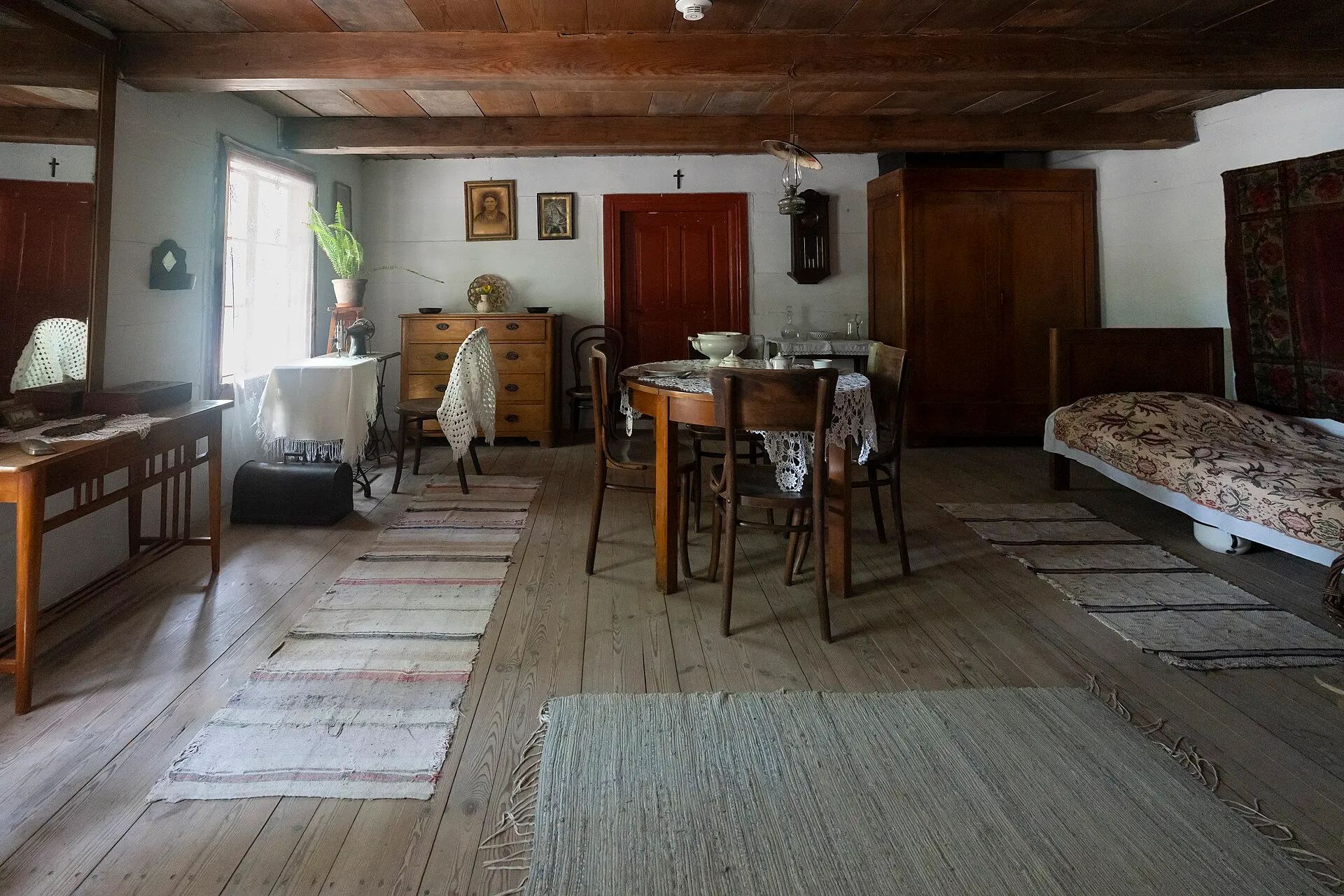
The house was large and dark, but the study was warm and comfortable. A great fireplace, an old armchair, and on the wall a portrait.
In the portrait stood a man in a red robe, stiff, and his eyes looked nowhere.
In the corner of the room hung a thick rope, and Malcolmson asked the housekeeper what it was.
“It was the judge’s,” said the woman. “Do not touch it.”
Malcolmson did not touch it. He settled in and set to work.
The first night was quiet. On the second, something scratched inside the wall.
On the third, it was scratching in several places, and the sound was like fingers counting the boards.
Malcolmson got up and examined the wall. Nothing.
When he sat down again, he saw a rat at the far end of the room.
It was large, much larger than a common rat, and it did not run. It simply sat and looked at him.
“Get out,” said Malcolmson.
The rat did not move.
Malcolmson threw a book at it, and the rat vanished under the cupboard.
On the fourth night the scratching did not stop; it multiplied, as though many creatures were at work inside the house.
On the fifth, Malcolmson no longer paid attention to the sounds. He worked, because the examination was coming, and because a person grows used to fear.
On the sixth night, towards morning, the scratching stopped all at once.
The silence was so deep that Malcolmson looked up from his book.
And then, out of the dark at the far end of the room, where the rope hung, somebody said his name.
It was not a shout. It was not a whisper. It simply said it, exactly as a name is read out to a man in the dock.
“Malcolmson.”
The student stood up. The chair slid back.
The portrait on the wall stood as it had before, and the room was as it had been.
Only the rope was moving, though there was no wind.
Malcolmson did not sleep that night. In the morning he opened the window and looked through the cold air at the square, where people were walking.
Then he sat down and tried to work. And he managed it, because in daylight one always manages.
That evening he went to bed early, because he was tired, and because he told himself that the voice had been the tiredness.
In the morning the housekeeper came, as she did every morning.
The door of the study was locked, and knocking did no good.
When they broke the door down, the room was quiet, the fire was out, and the portrait on the wall stood there in its red robe.
They found Malcolmson on the rope.
There was no wound on him, and there was no blood. There was only the rope at his throat, and all around the floor the marks of rats.
The housekeeper said afterwards that the rope was the same one that had hung in that room, and that nobody had ever been allowed to touch.
In the town nobody was surprised. Nobody has moved into the house since.