Professor Parkins never spoke of what happened at Burnstow. What we know we owe to a colonel and a housemaid, who had no reason to lie.
The professor taught ontography, and believed the world was in order: every phenomenon has an explanation, and whoever says otherwise simply has not read enough. He lost that belief not in an argument, but in a seaside town, in a room with two beds, because of a bed he could not get taken away.
That day at dinner Disney the antiquary spoke to him across the college’s long table. He asked him to look at the ruins of the Templars’ former preceptory on the edge of Burnstow, on the shore where he meant to play golf anyway. Parkins agreed. Rogers, always there where he was least wanted, asked if he was not afraid of stumbling on a ghost. The professor politely told him he did not consider the mere possibility of the supernatural a respectable hypothesis.
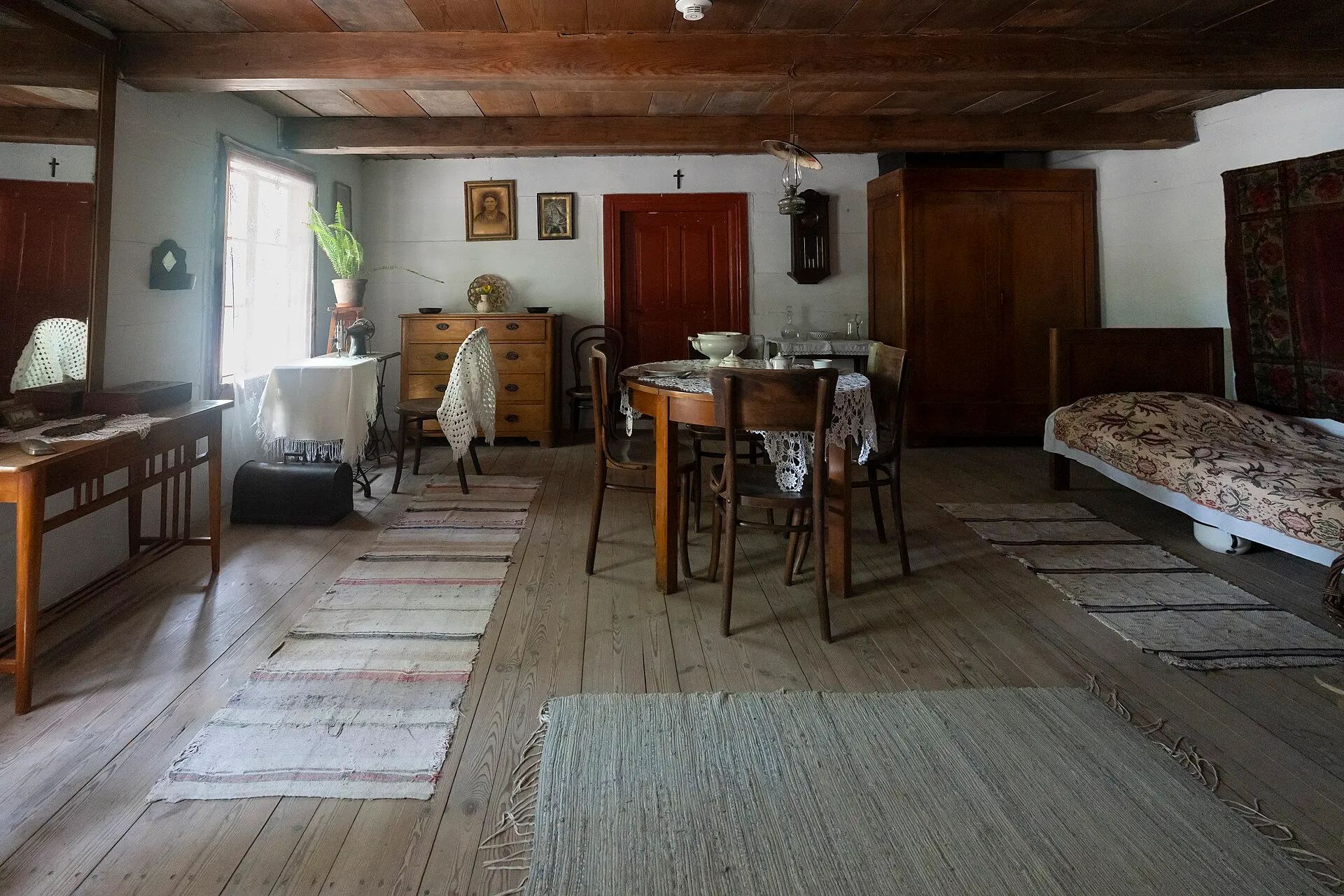
At the Globe inn he got the room only when everything else had been taken. It had two beds. One, against the wall, could not be carried out, because there was nowhere to put it. Parkins said it did not bother him. That was his first lie in that house.
On the shore, among the ruins, he stumbled. The ground near the northern end of the altar foundation sank under his foot, and when he scraped the sand aside he found a smooth, rectangular recess in the wall. Inside lay the thing: barely a handspan long, made of bronze, shaped like a dog whistle. He pocketed it, and did not look at it until he was home.
Only in his room, by candlelight, did he see the inside packed with earth that had dried hard. He scraped it out with his knife, tipped the dust onto a sheet of paper, then opened the window to throw it out — and down below, on the shore, at the water’s edge, someone stood. A late wanderer, he thought, and closed the window. Later he could not recall whether he had seen a face.
Two inscriptions ran around the whistle. One was a meaningless string of letters. The other was Latin:
Quis est iste qui venit.
Parkins smiled. Who is this who comes? The simplest answer was to blow it and see.
The sound was quiet, but it did not stay in the room. Somehow it stretched out, as when something speaks at the end of a long corridor, and the professor was suddenly somewhere else: a dark, windy plain, where a single figure stood motionless. Then the window sash slammed against the frame, and the vision broke apart.
The candles went out. The wind pressed at the curtain as if someone were leaning on it from outside.
That night Parkins did not close his eyes at all. Whenever he did, the same picture came: a pebbly shore, black groynes in a row, a stormy dusk. A man ran towards the groynes, looking back again and again, out of breath, and threw himself over the last one. There he crouched. And behind him appeared a shining white figure that did not walk but floated, irregularly, at a frightening speed. It stopped. It raised its arm. It bent to the sand as if searching for a track, then ran to the water and came back. At last it reached the groyne, straightened, lifted both arms high — and fell straight towards the hiding place.
This was where Parkins always opened his eyes. He burned candles until morning, and forgot to put them out.
In the morning the housemaid came with a blanket and asked which bed to put it on. Both had to be made up, she said. They looked as though someone had slept in both.
“After a wind like that, at home they’d say someone whistled for it,” remarked Colonel Wilson among the golfers. Parkins told him about the whistle, because he liked things to have names. The colonel examined it and said he would throw it into the sea.
In the afternoon a boy came running up to them from the street, sobbing. He said he had seen someone beckoning from the window — the window that belonged to Parkins’s room. A white figure, he said, and no face visible.
The room’s door was locked. The key lay in Parkins’s pocket. Everything was in place except the second bed: its covers had been gathered into a knot. The housemaid denied it. The innkeeper denied it.
That evening Wilson stopped in the doorway before going to bed.
“You know where I am, if you need me in the night,” he said, and it was not a question.
Parkins did not draw the curtain, because there was none. Out of a railway rug, safety pins, a walking stick and an umbrella he rigged up a makeshift screen to keep the moonlight off his face. The whole contraption collapsed half an hour later, and the moonlight ran the length of the room, straight onto him.
He woke to the empty bed moving.
At first he thought of rats. Then the bedclothes rose, and something sat up in them.
Parkins sprang out of bed and went to the window for his stick. It was the worst decision he made in that room. The figure rolled out of the bed and stood between the two beds, before the door, arms spread wide.
It had no face. Instead there was something that resembled crumpled linen: folds, hollows, a knot where the mouth should have been. Nor had it a body: not flesh, not bone, but a sheet gathered up and folded into a shape.
The figure groped blindly. Its hand clutched the air, and all the while it muttered something not made of words. It went to Parkins’s abandoned bed and felt the pillows. They were empty.
Then it stepped into the light.
Parkins could not hold the sound back. He cried out — in disgust, not fear, and that difference ruined everything. The figure turned. The corner of the sheet swept across the professor’s face, and in that instant the creature sprang at him, and he, falling backwards, already half out of the window, screamed, and the crumpled linen pressed against his face.
Colonel Wilson broke down the door.
By the time he got there, one figure was left in the room: Parkins, fallen inwards onto the floor, and before him a crumpled heap of bedclothes that did not move.
The next day the colonel asked nothing. He shut everyone out, put the professor to bed, and slept in the other bed himself, wrapped up. When Rogers arrived, all three conferred at length. In the afternoon Wilson carried a small object out to the shore between two fingers and flung it into the sea. Later smoke rose from the back wing of the inn; what they burned, the record does not say.
The official explanation the two of them invented suited everybody: the staff got what was coming to them, the professor was rid of the suspicion of delirium tremens, and the house of its reputation as a haunted house.
Parkins, however, was never the same. His views were shaken; his nerves were not. He cannot look calmly at an overcoat hanging on a door. And if, on a late autumn afternoon, he sees a scarecrow in a field, he does not sleep well for weeks.
The one question that really matters, nobody can answer: whether the creature could have done more than frighten him. Wilson says not. It had no material part, only the bedclothes out of which it formed a body, and its single power was to make a person cry out.
That is the consolation. For Professor Parkins it was not enough.