Mr Puckler believed, and never hid it, that dolls are alive. Not figuratively: every little porcelain-headed, clockwork, silk-dressed creature led a separate life in his workshop, and when he turned the lamp off in the evening he was sure that in there they all turned to one another and discussed the day.
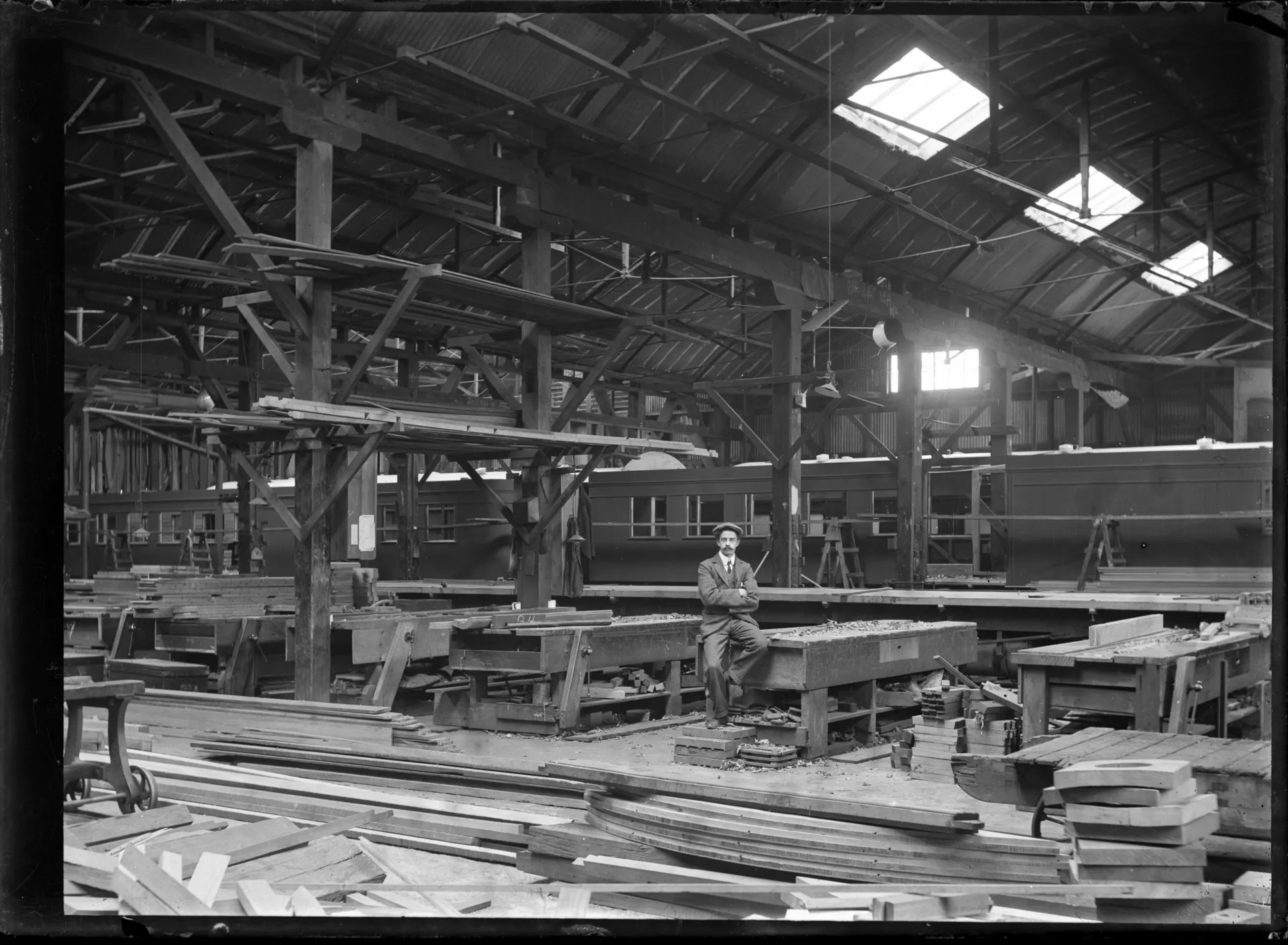
The belief never hindered his work. He kept his shop in an alley near Belgrave Square in London, where he was the best doll doctor in the city, and where parents passed the address from hand to hand like a secret. To glue a porcelain face back together, to put a glass eye back in, to coax a clockwork arm into speaking again — that was a trade, handiwork, patience — and Puckler had all three.
He had one daughter, Else, who had just turned twelve. She sewed the dolls’ clothes, and she took the healed patients home, because her father could never say goodbye to a doll he had spent long weeks mending.
At the end of August a governess brought in a doll belonging to a little lady who had fallen down the marble steps. The child was unharmed. The doll was not: its face was cracked from forehead to collar, two pieces had fallen out, and its right arm said only “Pa—” and stuck there.
Puckler looked at it and said he could do it. Then he looked again, because the doll’s brown glass eyes were exactly like Else’s, and because the name the governess gave — Nina — had somehow stayed with him.
He worked on it for six weeks. The crack closed, the arm spoke its two syllables again, the dress was renewed. One hair-thin line remained on the face, from forehead to collar, and Puckler was not reconciled to it.
The governess came for it twice, and twice he sent her away saying it was not yet perfect. The third time Else put the doll into the big brown paper box, because her father could not. The box stood on the table, and looked like a coffin.
“I’ll take it back tonight,” said Else, and set off towards the house half a mile away. She was twelve, and not a fearful child.
It grew dark. Puckler lit a candle and waited.
His daughter did not come back.
Nine o’clock. Ten. Half past ten. The father went out into the street, as far as the back entrance of Cranston House — there a rough servant said no little girl had been there, and slammed the door. Puckler walked to Belgrave Square, asked a policeman, a cab driver, a man loitering by a notice board who was not even listening.
It was one in the morning when he got home. He sat down at the workbench, and in the moment he sat down he already knew what a father knows at such times. He did not say it. He only sat and looked at the wall.
Then something touched the edge of his coat.
It was a small twitch, as if a hand had tugged at the cloth, and he felt a cool breath in his hair. The candle flame almost went out, but nothing blew it; it only shrank, as if someone had passed by it.
And a voice spoke, flatly, with a pause between the two syllables:
“Pa… pa.”
Puckler leapt up; his chair fell over backwards. The voice came from Nina’s mechanism, but with something altogether different at its centre: a child’s crying.
The doll stood in the middle of the room.
It did not step, nor truly float; it simply was, with a faint light along its outlines, and the cracked line of its face glowed like a white thread of flame. The brown glass eyes stared at him. Then the doll raised its arm and beckoned: come.
And it walked out through the door.
Puckler followed. Down the alley, along the street, across Belgrave Square, through the yellow circles of the gas lamps, where the doll’s silk dress flashed pale green under every lamp. It did not speak, and did not look back. It only went, and the father went after it, like a man no longer thinking at all.
In a wide, quiet street the doll stopped before a large gate, where two lamps burned and a brass bell-pull was set in the wall.
A hospital.
The porter said: a little girl had been brought in shortly after ten; they thought she was only shaken. She had been clutching a large brown paper box, and a long, thin plait hung down over it.
On the children’s ward Else opened her eyes.
“Pa-pa,” she said, and this time it was not a mechanism. “I knew you would come.”
She told him: at the gate some big boys with bad faces had blocked her way, wanting the box. She would not give it up. One of them hit her. She did not remember how she got here.
The nurse opened the box.
Nina was completely broken. The porcelain face had split in two, the arm had fallen silent, the silk dress hung in shreds. The gentle light of the children’s ward glinted pale green on the shattered material.
The child lived. The doll died.
The next day Puckler took his daughter home, and for weeks he did not touch the workbench. When at last he sat down again, for a while he only looked at the place where the box had stood. Then he took up his very first job, a doll with a broken hand, and set to work.
He could not explain it, and never tried to: the least likely thing about that night was that a broken doll should lead him to his daughter. And if it did happen, all the same — then Nina did not come back to say goodbye, but to lead him where he had to be.
From then on Puckler mended every doll brought to him, and kept none. In the evenings, when he turned off the lamp, he still went to bed believing that in there they all turned to one another.