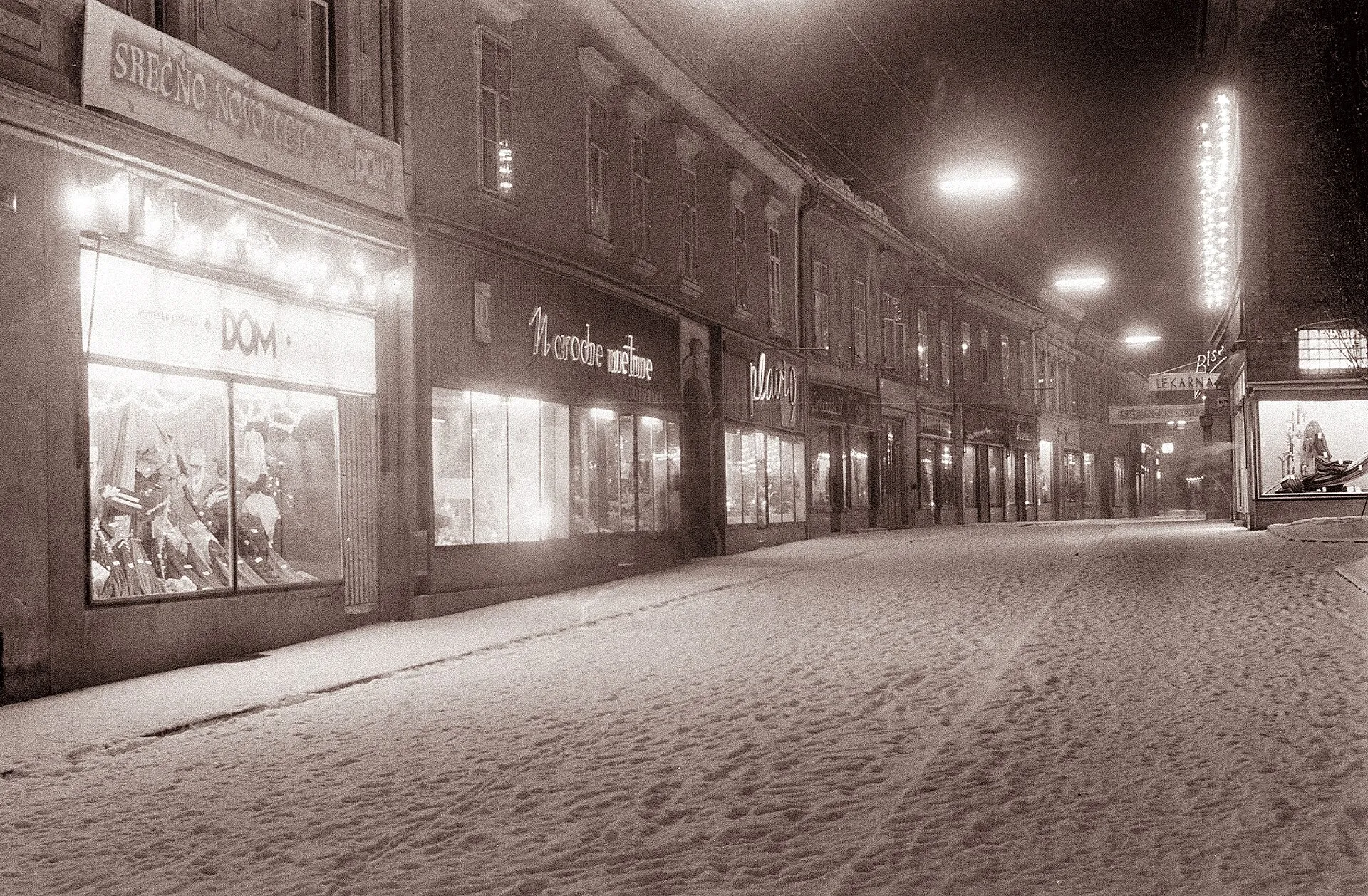
In winter the shop was always colder than the street, because Lili left the window open so that people could see: nobody hurries here. The vintage shop called Second Life had been running for twelve years in a side street off Ráday Street, and Lili knew exactly what she lived on: clothes that somebody had once loved and then parted with.
On the third of December, early in the afternoon, a man came in with snow on his shoulders and laid a black wool coat on the counter.
“Can you tell me what it’s worth?” he asked.
Lili looked at the coat. Good cut, a late fifties pattern, flawless condition. Then she looked at the buttons, and her hand stopped in the air.
The third button. A black horn button, but with thin, copper-coloured thread stitched round its middle — because her grandmother had always said that sewing a button on is not enough; you have to mark it, so that a person knows which is theirs.
Lili had sewn that button on twelve years ago. At a bus stop, in the frost, onto a man’s coat, who had given her his own because she did not have one.
She raised her head.
Péter stood on the other side of the counter. He was older, more serious, short-haired, and did not look at all like someone who remembered.
“This is my coat,” said Lili.
The man frowned.
“I beg your pardon?”
“That’s not what I mean.” Lili put her finger on the button. “This button. I sewed it on. Twelve years ago, at the stop on Szent István Boulevard, because it had come off, and you hadn’t noticed, and I sewed it on, and you said I should keep the coat until you came for it.”
Péter sat down very slowly on the chair beside the counter.
“The number twelve bus,” he said quietly. “It didn’t come. We waited two hours.”
“Yes.”
“And you…” The man fell silent and looked round the shop. “You kept it.”
“I didn’t keep it,” said Lili. “I took it with me to Pécs, then back, then twice I wanted to sell it, and twice I couldn’t. Once a girl tried it on, and I told her it was sold. I lied.”
Péter buried his face in his hands. He did not cry. He only pretended that his eyes were tired.
“I looked for you,” he said. “For a year. I walked the whole neighbourhood, I asked in the tobacconist’s, I asked at the bus stop. Then I went to Vienna to work, and I thought that somebody who doesn’t come back within two hours doesn’t want to come back at all.”
“I didn’t want to come back,” said Lili. “Because at that time I had nowhere to come back to.”
It went quiet. Beyond the window a dog went past in the snow, and its tracks ran across the glass.
“Do you have somewhere now?” asked Péter.
Lili did not answer straight away. She folded the coat and put it under the counter.
“I’m not selling the coat,” she said. “This isn’t a piece for sale. It’s something left in trust.”
“For how long?”
“Until somebody comes for it.”
Péter smiled — lopsidedly, the way he had twelve years ago at the stop, when he said: keep it, I’ll be right back.
“Then I’ve come for it today,” he said.
Lili brought out two glasses and poured from a bottle of cherry brandy she had inherited from her grandmother, and which she only opened when something important had happened. The shop was cold, the heating rattled, and the snow slowly covered the window.
“Why did you bring it in?” asked Lili. “If you kept it for twelve years, why now?”
“Because I’m getting married next week,” said Péter. “And I didn’t want to be the kind of person who starts something while there is a coat he didn’t dare take back.”
Lili looked at her glass. The glass was cold, the brandy warm.
“And what will you do now?” she asked.
Péter stood up. He took the coat and did not put it on — he draped it over his arm, like somebody who does not know what to do with his own life.
“I don’t know,” he said. “But I think first I have to ask what this woman, who kept a coat for twelve years, is doing this evening.”
Lili looked at the coats hanging on the wall, which had all come from other people’s lives, and thought that the whole shop was essentially about this: objects waiting for somebody to come back for them.
“I’m closed this evening,” she said. “But I’m not locking the back door.”
Péter put the coat back on the counter. Then he stood beside Lili and put his hand on hers — he did not squeeze it, only left it there, on the counter, on the folded wool.
“Then let’s begin by not hurrying,” he said. “After twelve years it wouldn’t be proper.”
The kiss was slow, and it tasted like the cherry brandy: warm, a little bitter, and much more than a person expects.
Later, when Lili closed the shop and the snow had completely covered the window, she hung the coat on the back rack — in the innermost place, where the most precious, unsellable pieces go.
Péter looked back from the doorway.
“I think this coat will never be mine,” he said.
“No,” said Lili. “But it has its place on the rack.”