Réka’s bookshop had stood at number six Kossuth Street for twelve years, and over those twelve years she had become convinced of exactly three things: that a good book cannot be hurried, that coffee must not be ruined with sugar, and that the shop opposite is cursed, whoever moves into it.
The curse opened this November under the name Tamás, and immediately put on its board: “Specialty coffee — artisan roasting”.
The next day Réka wrote on her own board: “Books. Coffee. Quiet.”
To which Tamás wrote: “We have books too. And conversation.”
Réka: “Conversation is not quality.”
And the town, which in winter had not much else in the way of entertainment, began watching the two boards as if it were a serialised novel.
On the first of December the first snow fell.
Réka shovelled the pavement at dawn, because there should always be a clear path in front of a bookshop — that too is a kind of professional pride. When she finished, she looked up and saw Tamás standing on his own side, having built a perfect, two-metre-high wall of snow along the edge of the pavement, as if raising a rampart.
“What’s that?” asked Réka.
“Protection,” said Tamás. “The snow protects the window from the salt.”
“Or you just can’t resist doing something that can be looked at.”
Tamás smiled. It was that smile because of which Réka twice in December forgot what she had meant to say.
“You watch me,” said the man.
“I watch the pavement.”
“Of course.”
That afternoon the poster for the town’s Advent fair appeared: this year, for the first time, there would also be a stall competition. Whoever puts together the most beautifully decorated stall wins the “prime spot” of the town’s Christmas lights — the corner where the most people pass.
Réka and Tamás read the poster in the same minute, and in the same minute looked at each other.
“That’s mine,” said Réka.
“The jury will decide that,” said Tamás.
The two weeks passed like a war whose only casualties are friendly ones. Réka tied fir branches to her stall and put hand-written seasonal cards on the shelves. Tamás mulled wine with orange peel and gave a card with every mug, on which he had written: “This coffee is also available in the bookshop today.”
Réka regarded this as a declaration of war.
“That’s commercial,” she said, when she went over.
“That’s hospitality,” said Tamás. “Taste it.”
Réka tasted it. For two seconds she said nothing.
”…It’s quite good,” she said at last, because she could not say anything else.
Tamás nodded, as if this were the greatest recognition he had ever received.
On the fourteenth of December it began to snow, and on the first evening of the fair, when everyone was already cold and everyone was laughing, somebody — according to town gossip, twelve-year-old Bence from stall number seven — threw a snowball. Then another. Then nobody could remember who had started it, and between the two neighbouring stalls twenty people were pelting each other with snow, children were shrieking, a dog was barking, and the pot of mulled wine nearly tipped over.
Réka took a snowball in the collar, squealed, and the next moment she was kneeling on the ground, packing snow.
Tamás stood behind her and guarded her back.
“Not now,” panted Réka. “You’re against me.”
“Not tonight,” said Tamás. “Tonight everyone is against us.”
The battle ended when the mayor appeared, and everyone suddenly became very busy. Réka stood behind her stall with wet hair and a flushed face, trying to wring out the coat soaked by snowballs. Tamás came over and handed her his own scarf.
“Don’t say it’s protection,” said Réka.
“I won’t,” replied Tamás. “I just don’t want you to catch cold. That’s a selfish thing.”
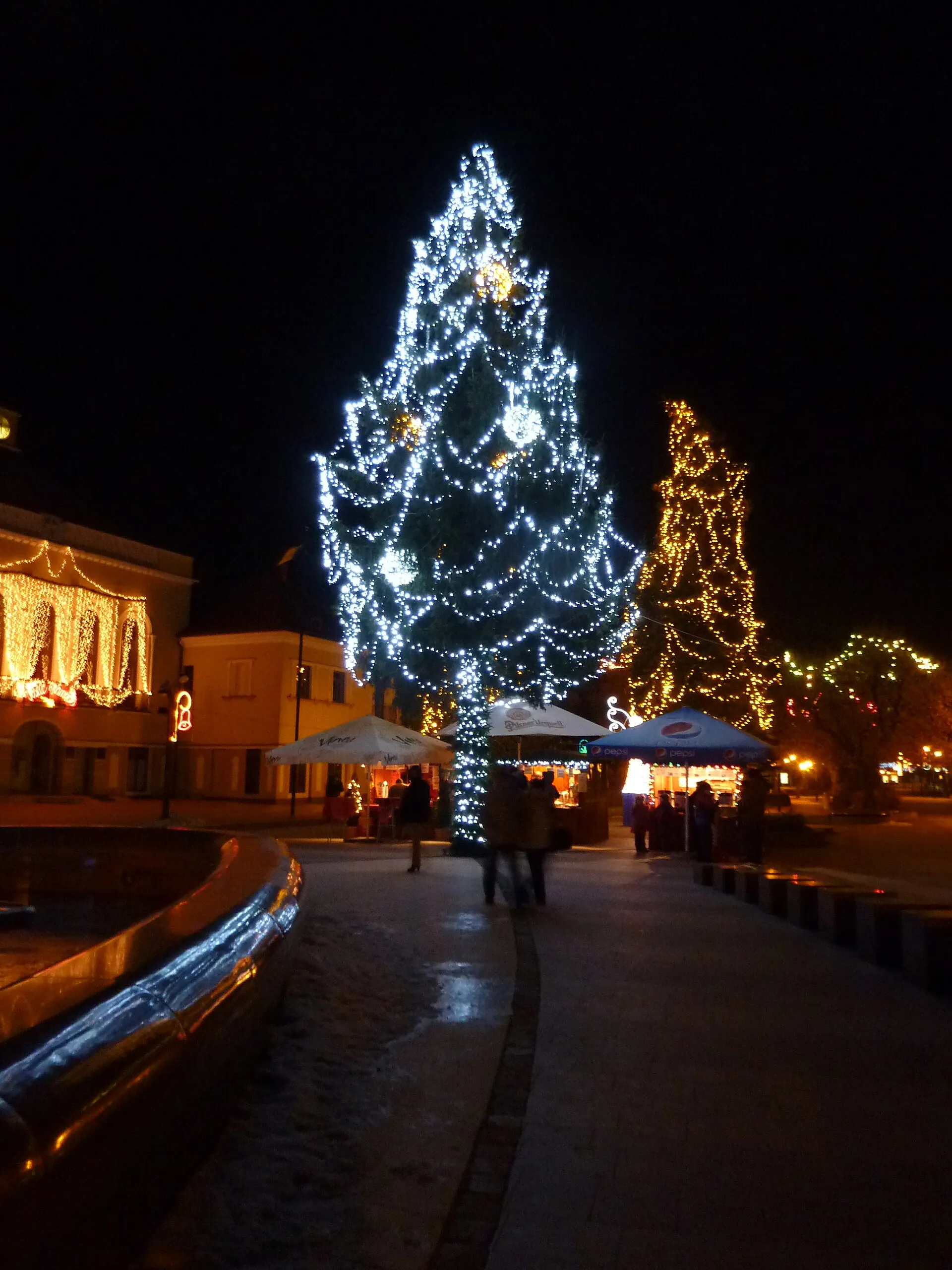
Réka looked up. The snow drifted slowly above the stalls, and the strings of lights shone as warmly as a kitchen window.
“You love this town,” she said suddenly.
“I do,” said Tamás. “That’s why I came back. And to be honest: I wanted to open a bookshop. I just didn’t dare, because yours has stood there for twelve years, and it’s better than anything I could do.”
Réka was silent for a long time.
“Then why did you never come in?”
“Because I was afraid I wouldn’t be able to talk to you the way I do on the boards. There every sentence comes off well. Face to face it doesn’t.”
Réka took the scarf and wrapped it round herself.
“Face to face is better,” she said. “You just don’t know, because you haven’t tried.”
Tamás took a step forward. Réka did not step back.
“The jury decides tomorrow,” said the man quietly.
“The jury can decide,” said Réka. “But I’ve already decided that we’ll share the corner of the lights. Two stalls, one corner. My books with your coffee.”
Tamás laughed out loud — deeply, honestly, and that laugh was like when somebody steps onto a frozen lake and feels that the ice will not break.
The kiss was short, and tasted of snow.
Afterwards Réka pointed at her board.
“I’ll rewrite the board tomorrow,” she said.
“To what?”
“‘Books. Coffee. Quiet — except when we’re having a snowball fight.’”
Tamás nodded and said seriously:
“That’s long.”
“It’s accurate,” replied Réka.
And the next morning, when the town woke to find two boards standing side by side in front of number six, in the same handwriting, everyone understood that the serialised novel was over.
In its place something much better had begun: a shared story.