The snow was not falling — it stood vertically. Klára watched from the waiting-room window as the flakes stopped in the air, as if somebody had hung the whole evening out to dry. The loudspeaker announced for the third time that the train to Nyíregyháza was at least two hours late, and its voice was as calm as someone who knows nobody believes him anyway.
Two days before Christmas a person either hurries or gives in. Klára gave in. She sat down at the very end of the platform on the plastic bench under which the heating still worked, and pressed her palms against her knees.
“Is this free?”
The man stood in front of her in a black winter coat, snowflakes on his shoulders, holding a suitcase that clearly had tape from three continents on it.
“Please,” said Klára, and moved along.
They did not speak. Perhaps for ten minutes. Then the man took out a thermos, poured some into a metal mug, and offered it.
“Mulled wine. I don’t know whether you like it, but it’s colder than either of us is dressed for.”
Klára took it. The wine was hot, with cinnamon, and after the first sip she felt something loosen in her chest that she had been clenching for weeks.
“Thank you,” she said. “Klára.”
“Ádám.”
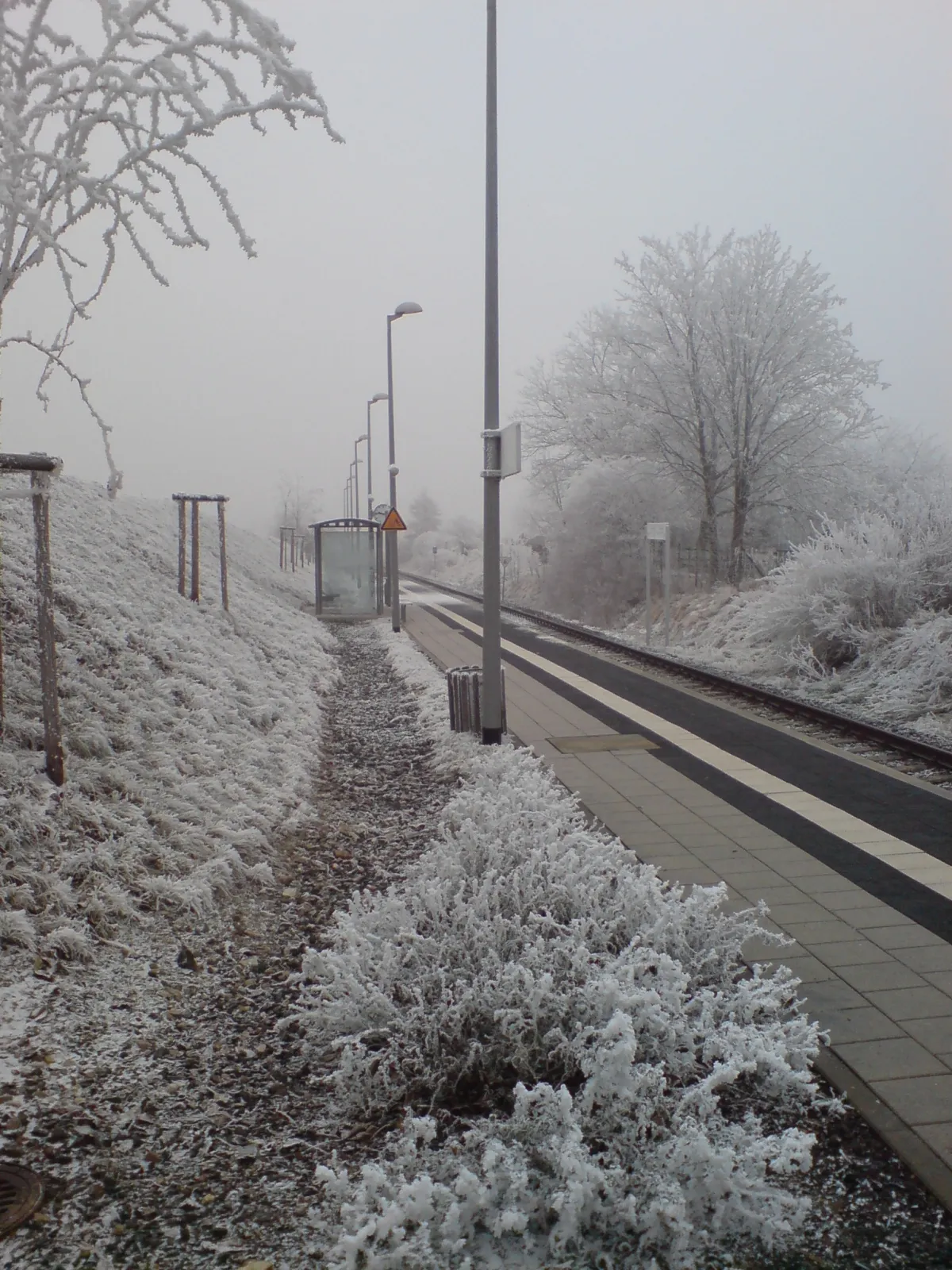
Beyond a glass pane the snow slowly covered the rails.
“Are you going home?” asked Klára.
“No. I’m on my way home,” said Ádám, and the uncertainty was audible in his use of the word. “I’ve lived in Vienna for eleven years. Now I’m coming back. For good.”
“Why?”
Ádám looked at his mug.
“Because after a while a person realises that the city where you feel good is not the same as the city where you are at home.”
Klára smiled. Not on purpose — it just happened.
Then they talked. About how Klára teaches the cello, and how her hands always ache from the cold in winter. About how Ádám is an architect, and how in Vienna he learnt what it is to love a city while having nothing to do with it. About how Klára’s mother died in the spring, and how this is the first time since then that she is going home for the Christmas she does not know how to do.
Ádám did not say “I’m sorry”. He said:
“The first Christmas is the hardest. By the second it is only sad, and it doesn’t hurt every minute.”
Klára looked into his eyes. It was the first sentence of the evening that she believed.
The platform grew cold. The snow lay thicker in the circles of the lamps, and the loudspeaker announced the delay for the fourth time, now with an apologetic tone. Klára shivered — not from the cold, but because her body suddenly remembered that she had been on her feet for twelve hours.
Without a word, Ádám unhooked his scarf and held it out.
“I won’t ask for it back,” he said. “Only until the train arrives.”
Klára put it on. The scarf was warm from the man’s neck, and that warmth was indecently personal, like a confession nobody had asked for. Still she wrapped it round herself, and when Ádám leaned in to straighten its edge, their breath met for a moment in the cold air.
The kiss was short. Not passionate — more like when somebody finds the light switch in a dark room and realises it was not that dark after all.
Then they drew apart, and both laughed, because kissing on a platform, with a two-hour delay, two days before Christmas, with a person you have known for two days — that is exactly the kind of foolishness a person does at eighteen and, at forty-two, only tells stories about.
“The train might not come,” said Ádám.
“It will come,” said Klára. “And then we’ll get on, and each of us will travel into our own Christmas, and we will never see each other again.”
Ádám nodded. Seriously.
“That’s one possibility,” he said. “But it isn’t the only one.”
At four in the morning the train pulled in. In a bluish-grey light, with brakes screeching from the snow, and when the doors opened, the warm air rushed out of it like out of a kitchen.
Klára stood up. She took off the scarf and gave it back.
“Thank you,” she said.
“Klára,” said Ádám after her, when she was already on the steps. “When you get there, and you don’t know how to do it… call me. I don’t know either. But perhaps the two of us can work it out.”
The woman reached into her pocket and wrote her number on the back of an old, folded ticket. She handed it over. Ádám put it away and did not look at it until he had got on.
The train started. Inside, they both sat by the window — in different carriages, because fate does not like stories that are too pretty. But when the train ran out into the snowy plain, and the dawn painted pink the frost frozen between the rails, Ádám reached into his pocket and looked at the number.
And Klára, two carriages back, smelled the scarf that the man had pressed into her hand after all, and smiled.
Some journeys do not begin at the destination. They begin on a platform, in a delay, between two strangers who happened to sit down on the same bench.