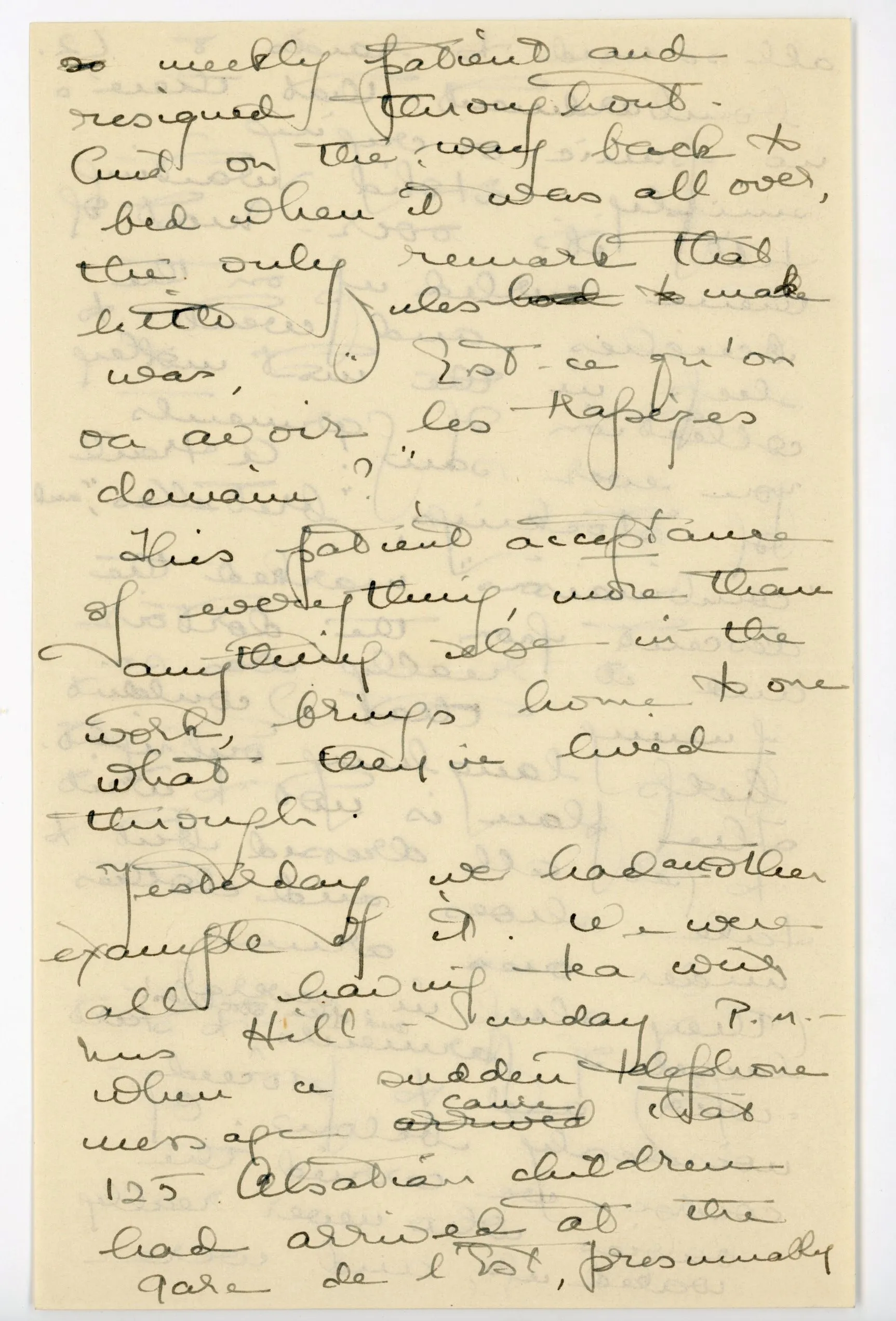
After my grandmother died we had to clear the attic, and in the back corner I found a box with this written on it: “Do not throw away.”
It was my grandmother’s handwriting. It was the only instruction she ever gave about what should happen to her things.
Inside the box there were letters. Thirty-six of them, tied together with a rubber band, and every one of them from 1956.
I did not read them straight away. First I carried the box down and put it in the wardrobe, because it felt as if it were not mine. Then a week later I did read them. A person does not open the box because they have a right to. They open it because they cannot hold out any longer.
The letters were written by a man who went to Vienna after November, and never came back.
The first letter was short and excited. The tenth was long, and was about how cold Vienna was, and how people speak Hungarian in the café, and how that is both good and unbearable.
In the twentieth letter this was written: “Write and tell me whether you are coming. If you write that you are coming, then next week I will go to the consulate and arrange everything. If you don’t write, I’ll still arrange it myself, but then it won’t be a question any more.”
The twenty-first letter was missing. The twenty-second was there, and in it was this: “I didn’t get an answer. I’m not angry. I would just like to know whether you received it.”
My grandmother’s replies were not in the box. Only the man’s letters, thirty-six of them, and the last one from 1959, two years later: “I have married an Austrian girl. A good person. I don’t know why I’m telling you this. I think because if I don’t, then it will never be over.”
I put the letter down and sat in the kitchen for a long time.
My grandmother lived with my grandfather for sixty years. They were happy — I do not say that out of politeness, but because they really were. My grandfather was funny, and my grandmother always laughed at him, even when the joke was bad.
And yet. Sixty years, and a box in the attic with “Do not throw away” written on it.
Then I understood that my grandmother had not kept the letters because she regretted the decision. She kept them because the girl who said no in 1956 was somebody different from the person she later became. And she did not want that girl to disappear completely.
That thought would not leave me.
At the time I was wondering whether to end things. I had been with someone for four years, someone who was good to me, and whom I could neither let go of nor truly love. Everyone said this was enough. That love passes, and what is left is a sensible life.
My grandmother chose that too, I thought. And she was happy.
But she did not choose it because she was afraid. She chose it because in that situation, in that country, in that year, there was no other choice to make. She had no choice. I do.
I did not end it that week. Instead I went to my mother and asked whether she had known my grandmother when she was young.
“She told me something once,” said my mother. “She said that once she almost left. And that the best decision of her life was not to leave.”
“Why?”
“Because the person who left, she would never have known. The person who stayed, she did.”
I did not know whether that was comfort or a warning. Perhaps both.
I put the letters back in the box, and the box back in the attic. Not because they were not mine. But because I think my grandmother was asking us not to throw away the thing that shows who we were before we decided who we would be.
Three months later I ended it.
Not because I was waiting for someone else. But because I did not want, sixty years from now, to have a box in the attic with “Do not throw away” written on it.