Every morning I take the same tram, and every morning the same man stands at the second door.
I do not know when I noticed. That is how it goes in a city: first you see nothing, then one day you see, and from then on you cannot unsee.
The second door matters because that is where you can hold on. On the number seven at eight in the morning there is no room, and whoever stands at the second door knows where to be so that they do not have to fight their way out at their stop. That kind of knowledge cannot be learnt. Either you have it or you do not.
He had it.
We did not speak. Not for four months. This is the urban thing that nobody explains: two people stand eighty-five centimetres apart, every morning, and neither says a word, because each is afraid the other will only be polite.
Then one Thursday I was late.
The tram was already closing its doors. I ran, and at the second door he held the door with his foot.
“Come on,” he said.
I got on. The tram started, and I was grateful, and I did not know what to say, so I said:
“Thank you.”
“Not at all.”
That was all. That evening I thought something had begun, but the next morning we did not speak again, and I pretended I was not disappointed.
A week later I was late again.
This time he did not hold the door. Not because he did not want to, but because he could not see me, because the tram was full. I could not get on, and I stayed at the stop, where the rain was falling.
In the evening I got a message. Not from him — I did not know his number.
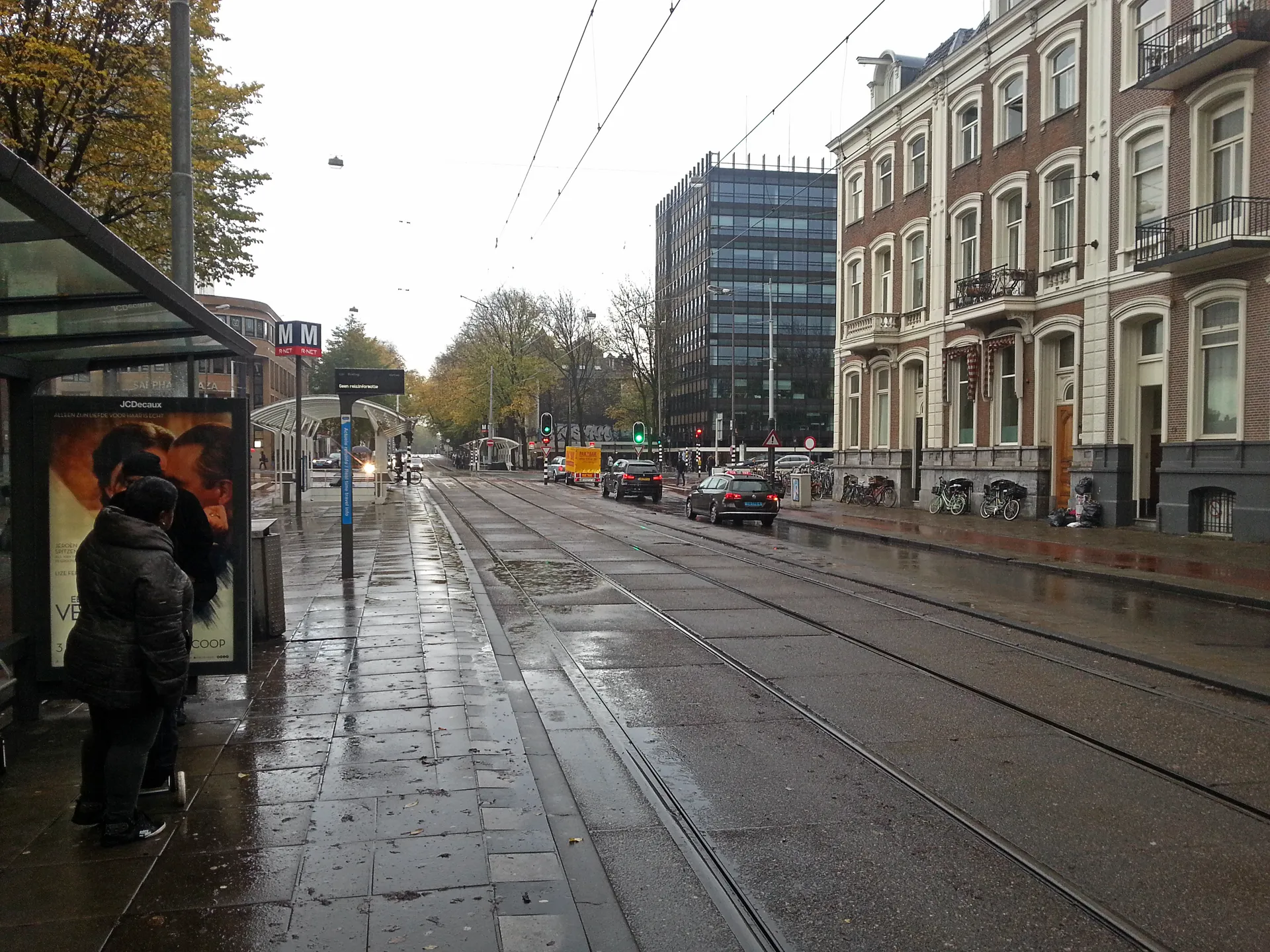
The tram company wrote to say that from next week the timetable on the number seven would change, because they were rebuilding the track.
It is ridiculous how much this upset me. The line was not mine. Only the morning was.
On Monday a bus ran instead of the tram, and the bus went a different way. I did not see him.
That week, every morning, I thought that I had never asked him where he was going. That I would never find out who he was. That in four months I had stood beside him eighty times and did not know his name.
On Friday, at the end of the first week of the works, a man got on at one of the stops and stood at the second door.
It was not him.
Then the following Monday, at the second door of the replacement bus, there he was.
He looked at me and said:
“I thought I’d missed it.”
That was not a sensible sentence. He could not have missed anything. But I understood it anyway, and I answered:
“So did I.”
The bus started. We did not speak any more that day. But the next morning I asked:
“Where are you going?”
“To the hospital. I’m a nurse. You?”
“To the university. I’m a librarian.”
He nodded, and did not say “that’s a nice job”, which is what everyone says. He only said:
“Then we’re both going somewhere quiet.”
That was his first real sentence in four months.
The track works finished in March. The tram came back, and we went back to the second door. Since then we sometimes talk and sometimes do not.
But the second door is no longer a coincidence. It is the place where the two of us are.