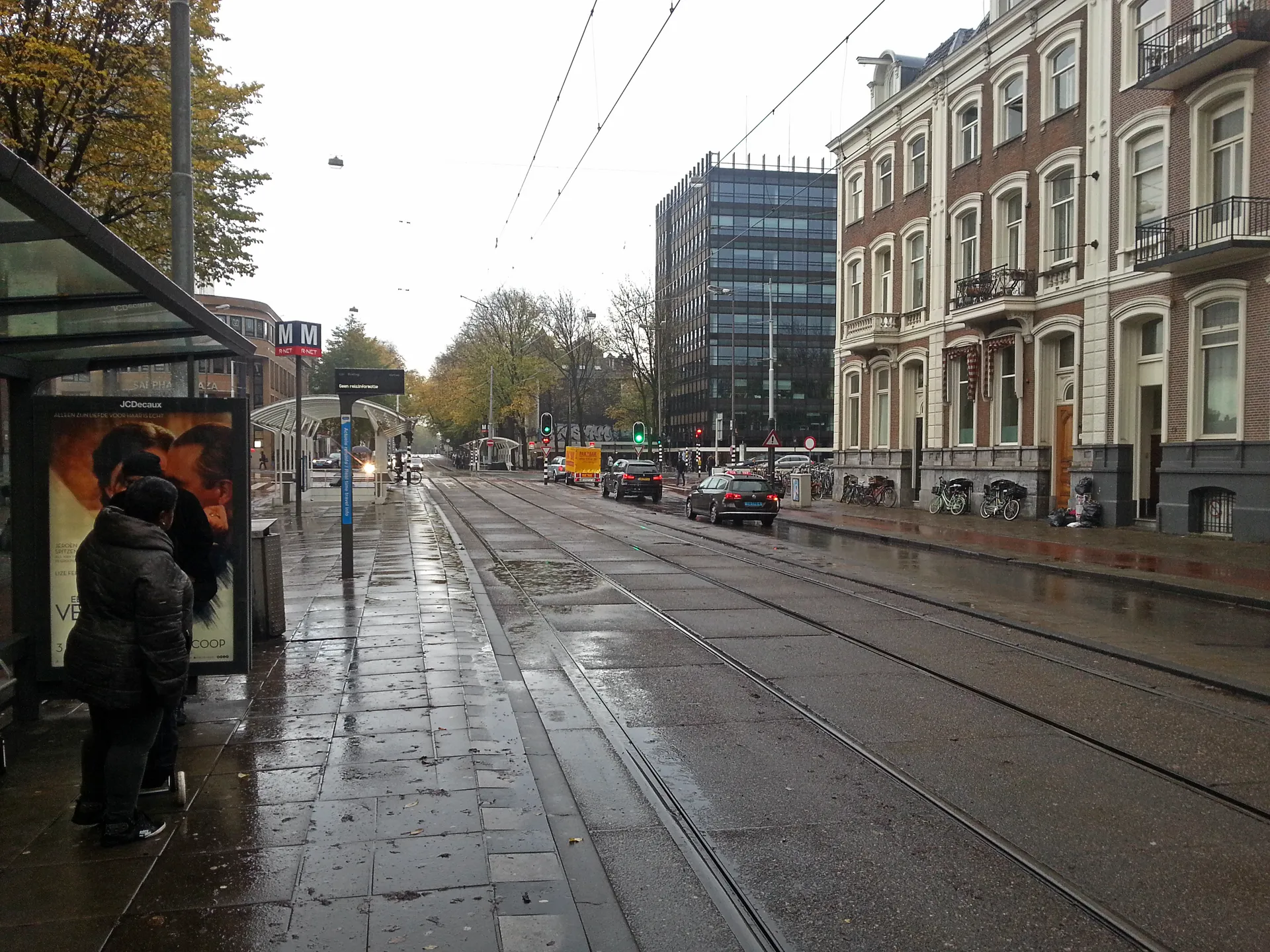
The rain began the way it does in a city: not gradually, but all at once, as if somebody upstairs had tipped over a bucket.
Six of us stood at the stop. Five under umbrellas. I was not.
Not because I did not have an umbrella. Because that morning I had believed the weather forecast.
The woman beside me stood there and for a while pretended not to notice that I was getting wet. Then she stepped closer and raised her umbrella.
“Come on,” she said.
I stepped in. The umbrella was small, so we had to stand close to each other. That is not done in a city. A person would rather get wet than touch a stranger.
“Which bus?” she asked.
“The fifteen.”
“So am I.”
That was all we said to each other that day. The bus was ten minutes late, then it came, and we got on, and we did not sit together, because there was no room.
The next day it did not rain. Nor the day after.
On the fourth day it rained again, and again I had no umbrella, and again she was there.
“You again,” she said.
“Again.”
This time we talked. It turned out she worked in an office in the centre, that she hated the bus, and that she took it only because the metro is a ten-minute walk away, and she would not give up those ten minutes.
“Why not?”
“Because those ten minutes are the only ones that are mine.”
I liked that sentence. Not because it was clever, but because it was true.
The rainy days became a routine. Not every day was rainy, but often enough for a person to get used to it. If it rained, she was there. If it did not rain, she was there too — just not because of the umbrella.
In September, one day she did not come.
I waited for two buses. Then a third. Then I went home.
I did not know her name. I did not know her phone number. I did not know exactly where she worked — only that it was in the centre, in an office.
This is the greatest foolishness of a city: a person talks to somebody every other day for three months and still knows nothing about them, because they never ask.
For a week I went out earlier every morning and stayed longer.
On the eighth day it rained again.
She was there. I could see the umbrella from far off.
“I was late,” she said. “I was ill.”
“You didn’t have to explain.”
“Yes I did.” She held the umbrella further over so that I could step in. “I wasn’t here for a week, and I didn’t know whether anybody knew that I come.”
That was the sentence that changed everything.
“Nobody knew,” I said.
“Then now you do.”
The bus came. This time there was room, and we sat next to each other, and at last I asked her name.
Since then we do not have an umbrella, we have two. One is hers, one is mine. At the stop we use only one of them, of course, because a person does not stand under two umbrellas.
But we carry the other as well. Once, coming out of the cinema, it started to rain, and we stood under one umbrella, and she said it was my fault for believing the weather forecast that morning.