Chapter 1 — Where the Bicycle Was
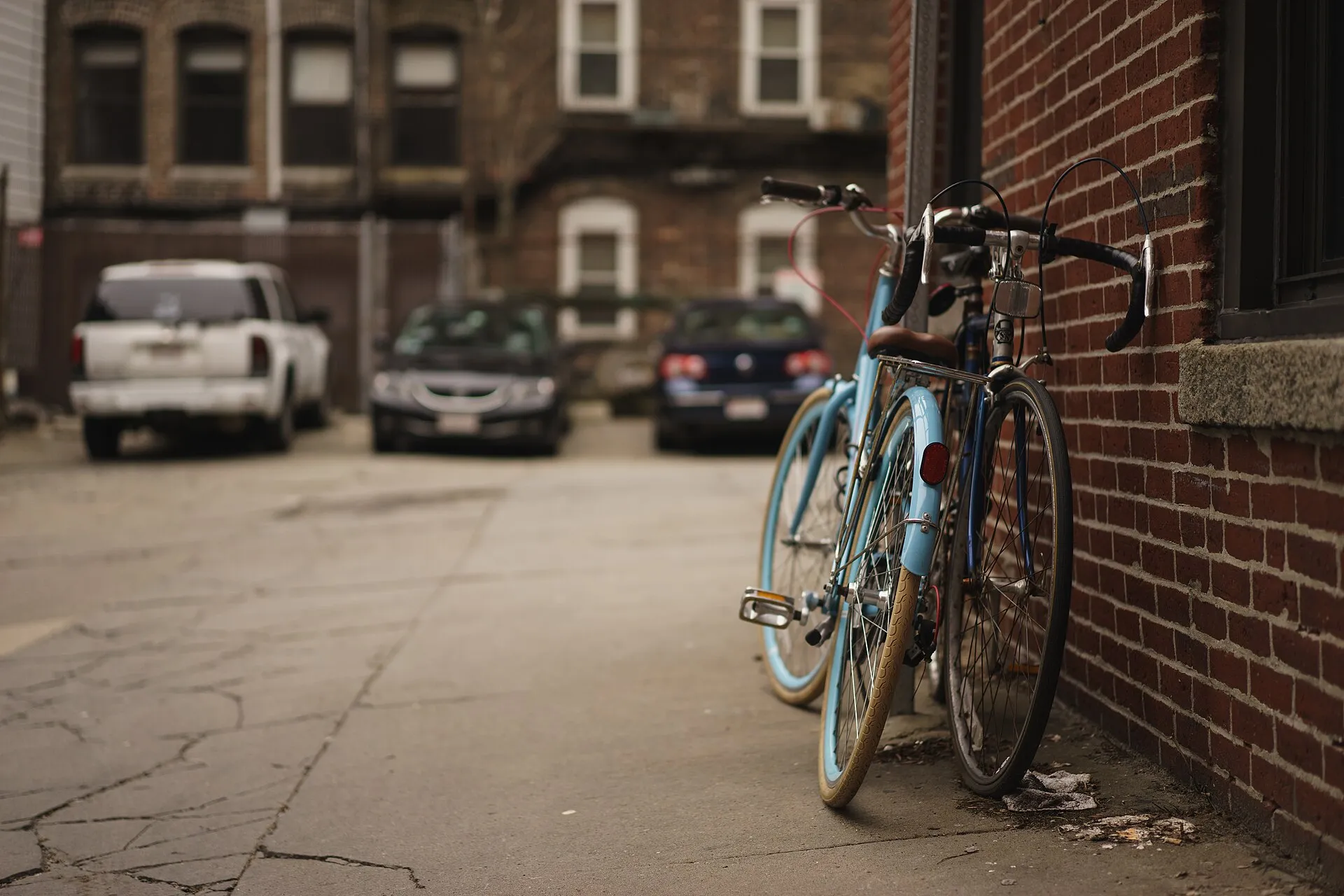
On Friday evening my bicycle was still standing in front of the building, under the lamp, where it always stands.
On Saturday morning it was not there.
I did not panic straight away, because my bicycle was old. Its name was Squeaky Brakes, because its brakes squeaked and could not be fixed. Mum said it was a “borrowed” bicycle, because it had belonged to my uncle and he had outgrown it.
But the bike was mine. That is the most important thing in the life of a ten-year-old.
I walked round the building. I looked in the cellar, in the gateway, in the neighbour’s garden. Nothing.
The caretaker was standing at the gate; she sees everything that happens in the yard.
“I didn’t see anything,” she said. “But I was out at five in the morning, and by then it was already gone.”
That meant somebody had taken it during the night. That is not good news.
Bence lives on the third floor and is my best friend. When I told him, he asked:
“Are you sure it was taken? You didn’t leave it somewhere else?”
“I’m sure.”
“Then we investigate.”
That is the best thing about Bence: he does not ask three times, he acts.
Chapter 2 — The Three Clues
The first clue was at the back of the yard: a wheel track in the mud leading towards the fence.
The second clue was a scrap of blue fabric caught on top of the fence. Not a handkerchief. More like the sort of material work trousers are made of.
And the third clue was that the plank beside the fence had worked loose — just enough for a person to get through.
“That isn’t a thief,” said Bence.
“Why not?”
“Because a thief doesn’t climb over the fence. A thief opens the gate and walks out. This is somebody who was in a hurry and did not want to be noticed.”
We followed the street the way the wheel track pointed. At the corner there is a bus stop, and beside the stop there is a bench.
On the bench sat a man who walked with a stick. He might have been fifty, or sixty. It is hard to tell.
Beside him stood a bicycle. Squeaky Brakes.
We said nothing. We just stood in front of him and looked.
The man looked up and said:
“Is it yours?”
“Yes,” I said.
“Then sit down and I’ll explain.”
Chapter 3 — What the Man Said
The man said that during the night his wife had become unwell. There was no telephone in the flat, because they had moved in recently and had not had one installed. Their neighbour was not at home. The doctor lives ten streets away.
“I didn’t know what to do,” he said. “I saw the bicycle under the lamp. I know it isn’t my business, and I know it isn’t allowed. But I took it and went to fetch the doctor.”
“And your wife?” asked Bence.
“She’s well. The doctor came, and by the morning she was better.”
There was silence. I looked at the bicycle, and I saw that the brakes were not squeaking. Which meant: he had mended it.
“You fixed it,” I said.
“Yes,” said the man. “Because if I had taken it, I should at least put it right. I couldn’t thank you any other way.”
That was the moment when I realised I was not angry. It was a strange feeling.
“Why didn’t you bring it back in the morning?”
“Because I didn’t know which building. I only remembered the lamp. I have been waiting here all morning for somebody to come past.”
Bence looked at me. We did not need to speak for me to know what he thought.
“We won’t call the police,” I said.
“No,” said Bence. “But next time, tell somebody. If there hadn’t been a bicycle, what then?”
The man nodded and was not offended. He said we were right, and thanked us.
We went home. I rode, because Squeaky Brakes was mine now, and better than ever.
Mum was waiting in the doorway.
“Did you find it?”
“Yes.”
“Who took it?”
I did not know what to say. Then I said:
“Somebody who needed it.”
Mum looked at me for a long time. Then she asked:
“And what do we do now?”
“Nothing,” I said. “But I’ve learnt that the bicycle has to go inside the gateway.”
Mum smiled.
“That’s what I wanted to hear.”